RESEARCH LIBRARY
The science behind each compound
An extension of our product pages: commonly discussed effects, biological mechanisms, study context and the sources behind them. Select a compound to jump to its section.
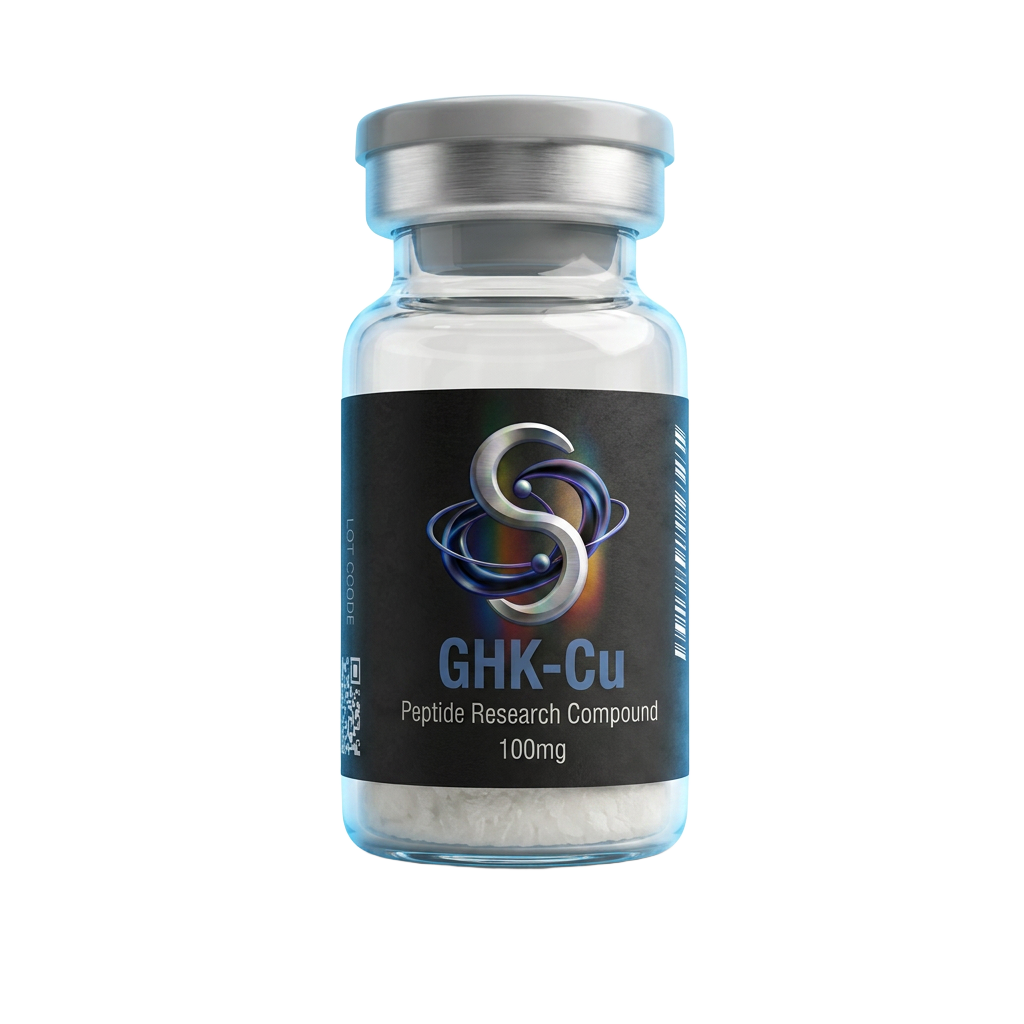
GHK-Cu 100 mg
A naturally occurring copper-binding tripeptide, most commonly studied in skin and connective-tissue models.
COMMONLY DISCUSSED EFFECTS
01
Collagen & matrix signalling
Studied in skin cell cultures for effects on collagen and extracellular matrix proteins.
02
Copper transport
Binds copper(II) with high affinity, a property central to most of its research models.
03
Antioxidant pathways
Investigated in laboratory work for effects on oxidative-stress markers.
04
Tissue remodelling models
Frequently used in wound-healing and fibroblast studies in animal and in-vitro systems.
05
Cosmetic science interest
Small human topical studies have examined skin appearance endpoints.
MECHANISMS & PATHWAYS
Copper coordination
GHK forms a stable complex with copper(II). Much of the published literature attributes its activity in cell models to delivery and modulation of copper, a cofactor for enzymes such as lysyl oxidase and superoxide dismutase.
Gene expression signalling
In-vitro transcriptomic work has reported broad shifts in gene expression in cultured fibroblasts, including genes related to extracellular matrix turnover. These are laboratory observations, not clinical outcomes.
Extracellular matrix turnover
Cell-culture studies describe changes in collagen, elastin, glycosaminoglycan and metalloproteinase activity, which is why the peptide is common in dermal research models.
STUDY CONTEXT
Fibroblast collagen synthesis in culture
Cultured human fibroblasts exposed to GHK-Cu; endpoints were matrix protein expression.
Rodent wound-model investigations
Topical application in rodent models examining closure rate and tissue quality.
Small topical cosmetic trials
Limited-size topical studies with skin-appearance endpoints; not therapeutic evidence.
SOURCES
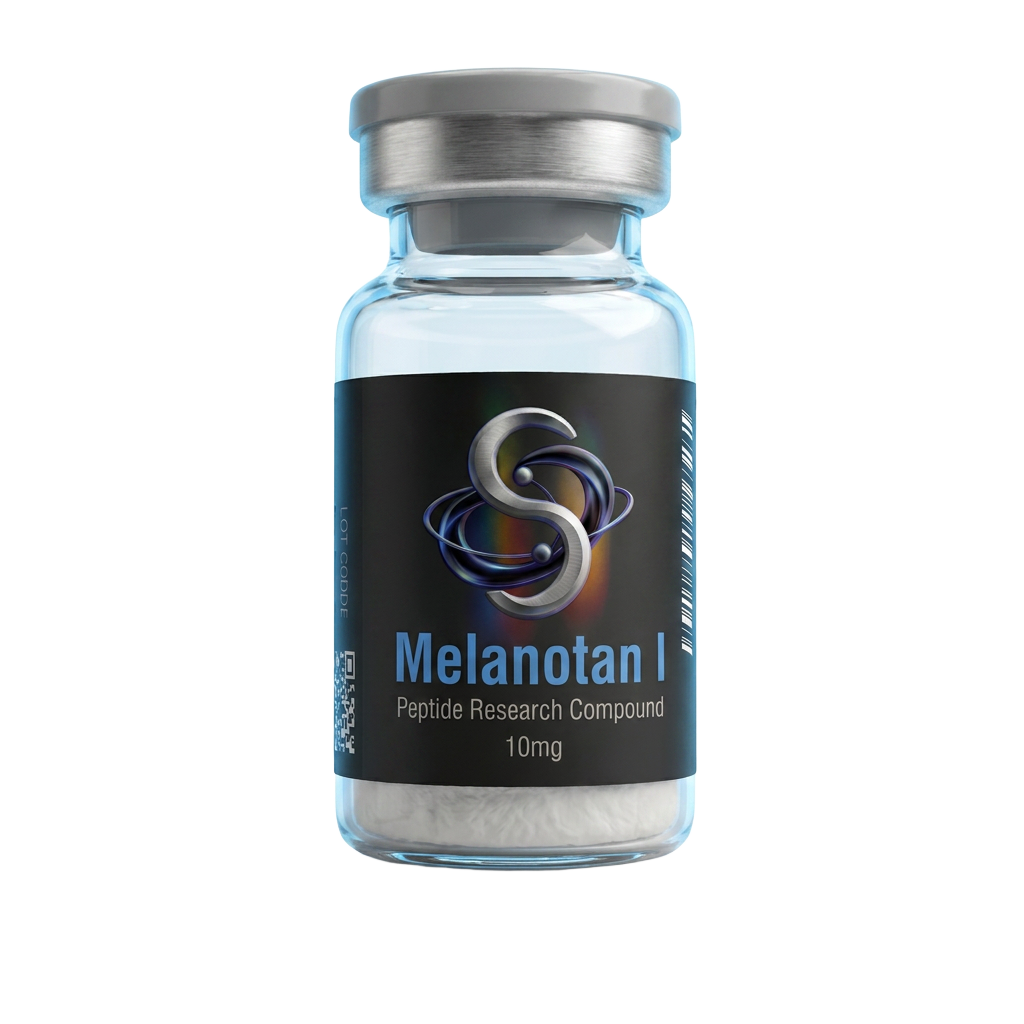
Melanotan I 10 mg
A synthetic analogue of α-MSH, studied primarily for melanocortin-1 receptor interaction and pigmentation biology.
COMMONLY DISCUSSED EFFECTS
01
Pigmentation pathways
Studied for melanin synthesis signalling in melanocyte models.
02
MC1R receptor binding
Acts as an agonist at the melanocortin-1 receptor in laboratory assays.
03
Photoprotection research
Investigated in studies examining UV-response endpoints in skin models.
04
Peptide stability
Cyclic/analogue design gives longer in-vitro stability than native α-MSH.
MECHANISMS & PATHWAYS
Melanocortin receptor agonism
Melanotan I is a structural analogue of α-melanocyte-stimulating hormone. In receptor assays it binds MC1R, the receptor most associated with melanogenesis signalling in melanocytes.
cAMP and tyrosinase signalling
MC1R activation raises intracellular cAMP, which in cell models upregulates tyrosinase and downstream eumelanin synthesis. These are mechanistic, cell-level observations.
Analogue pharmacology
Comparative research contrasts it with other melanocortin analogues that show broader receptor selectivity profiles.
STUDY CONTEXT
Melanocyte culture assays
Receptor binding and melanin output endpoints in cultured cells.
Rodent pigmentation models
Dose-response pigmentation observations in animal models.
Investigational clinical literature
Published investigational studies exist; the material is not approved for human use.
SOURCES
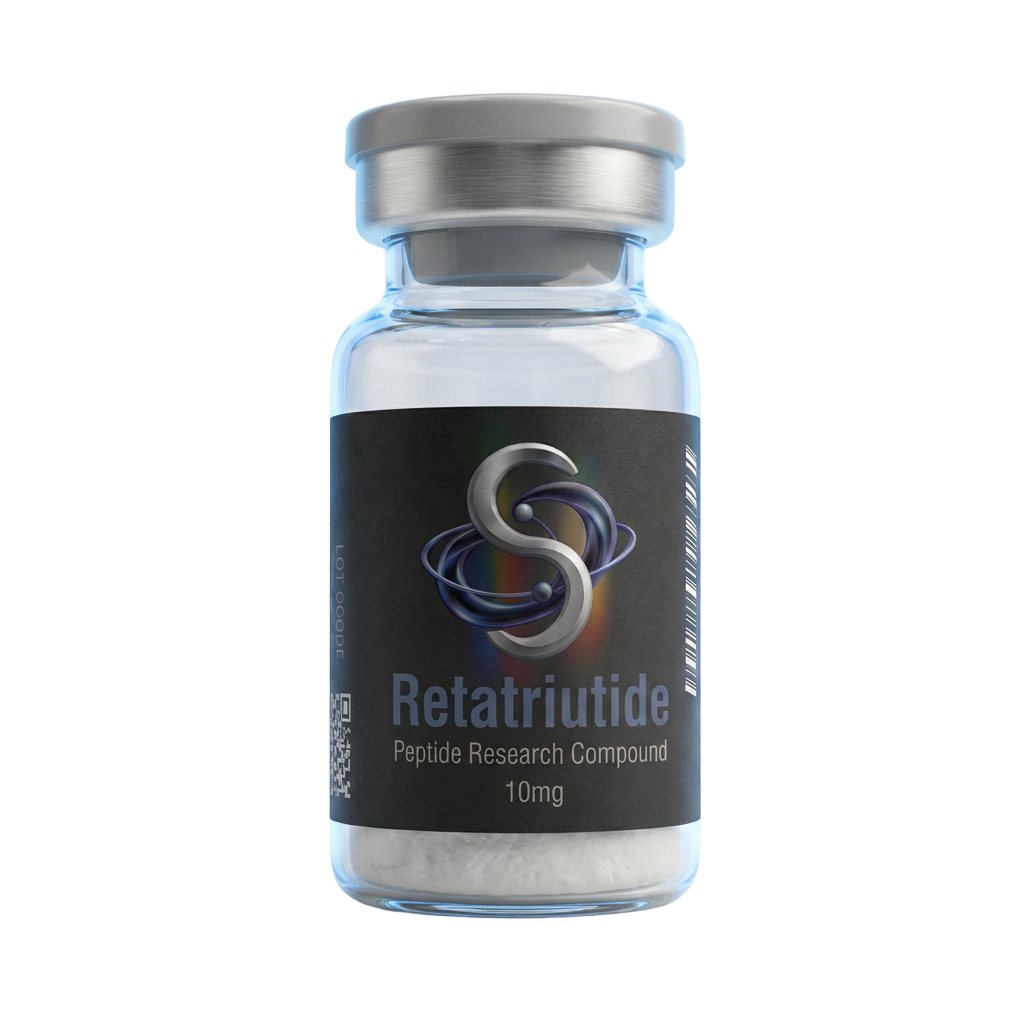
Retatrutide 10 mg
An investigational triple-receptor agonist peptide studied at GLP-1, GIP and glucagon receptors.
COMMONLY DISCUSSED EFFECTS
01
Triple receptor agonism
Binds GLP-1, GIP and glucagon receptors in pharmacology assays.
02
Metabolic research endpoints
Clinical trial literature reports body-weight and metabolic endpoints in humans.
03
Glycaemic signalling
Studied for insulin-secretion and glucose-handling pathways in trial settings.
04
Energy expenditure pathways
Glucagon-receptor activity is investigated for effects on energy metabolism.
05
Long-acting design
Engineered for extended half-life relative to native incretin peptides.
MECHANISMS & PATHWAYS
Incretin receptor pharmacology
Retatrutide is a single peptide engineered to activate three receptors: GLP-1R, GIPR and GCGR. Each contributes a distinct signalling arm in published pharmacology work.
GLP-1 and GIP arms
GLP-1 and GIP receptor activation are associated with glucose-dependent insulin secretion and appetite-regulating central signalling in the published literature.
Glucagon arm
Glucagon-receptor agonism is investigated for hepatic energy-expenditure effects, which distinguishes triple agonists from dual GLP-1/GIP compounds.
STUDY CONTEXT
Phase 2 obesity trial (NEJM, 2023)
Randomised trial reporting dose-dependent body-weight change over 48 weeks.
Phase 2 type 2 diabetes trial (Lancet, 2023)
Glycaemic endpoints across dose cohorts.
Preclinical receptor characterisation
Receptor binding and potency profiling across GLP-1R, GIPR and GCGR.
SOURCES
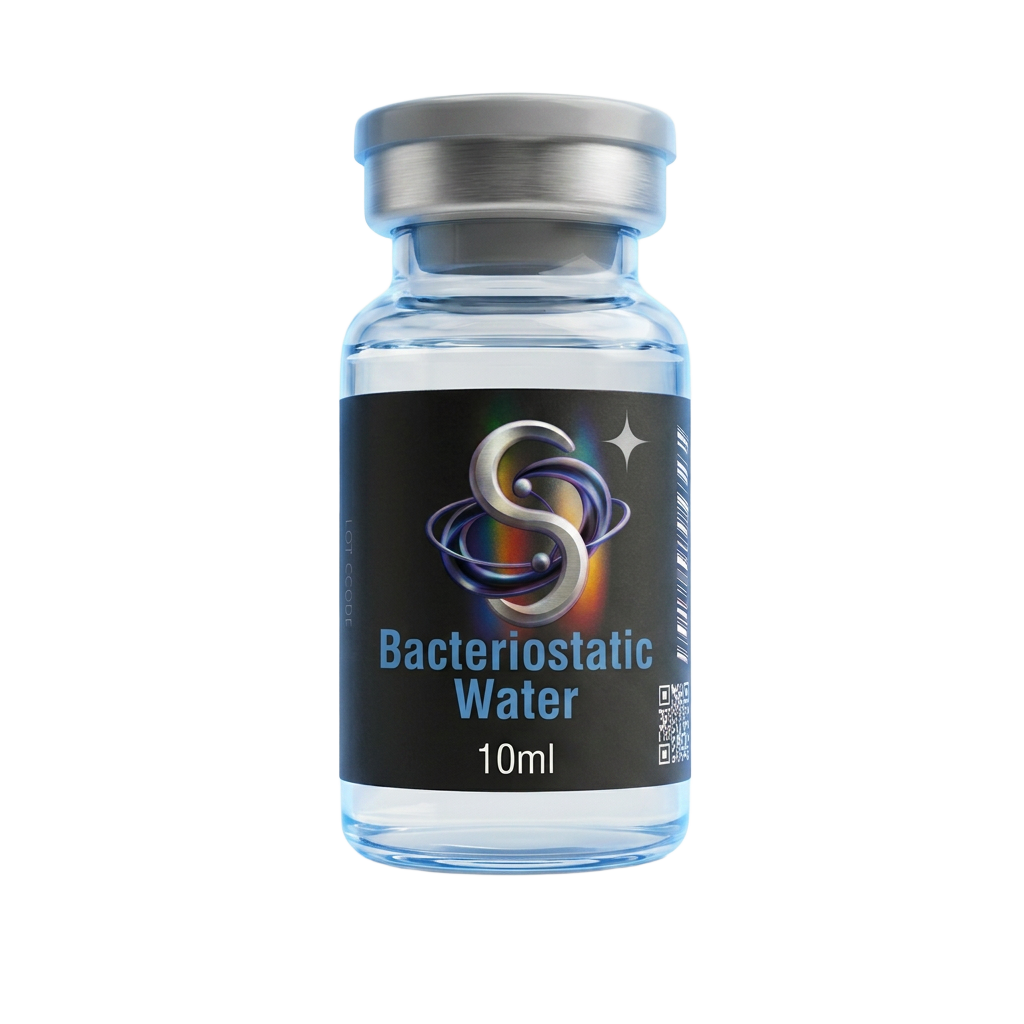
Bacteriostatic Water 10 mL
A sterile-filtered diluent containing 0.9% benzyl alcohol, used to reconstitute lyophilized research material.
COMMONLY DISCUSSED EFFECTS
01
Reconstitution diluent
Standard laboratory solvent for dissolving lyophilized peptide powder.
02
Bacteriostatic preservative
Benzyl alcohol at 0.9% suppresses bacterial growth in multi-draw vials.
03
Multi-use stability
Allows a reconstituted vial to be drawn from more than once under lab conditions.
04
Sterile filtration
Filtered and sealed to keep the diluent free of particulates.
MECHANISMS & PATHWAYS
Preservative chemistry
Benzyl alcohol disrupts bacterial membrane integrity at low concentrations, which is why 0.9% solutions are described as bacteriostatic rather than sterilising.
Peptide handling
Lyophilized peptides are typically reconstituted slowly down the vial wall to avoid mechanical stress; the resulting solution is stored refrigerated and protected from light.
STUDY CONTEXT
Preservative efficacy characterisation
Standard pharmacopoeial testing describes benzyl alcohol's bacteriostatic range.
SOURCES